Patrick Elf and Kavita Hamza
In June 2026, the SCORAI community gathered at the University of São Paulo for its first Global Conference in Latin America. Under the title Looking Back to Move Forward: Sustainable Consumption from Rio 92 to a Post-SDGs Agenda, the conference invited us to reflect on more than three decades of international debate about sustainable consumption and on almost two decades of SCORAI’s own development as a research and action network.
The location mattered. Brazil hosted the 1992 Earth Summit, which placed unsustainable patterns of production and consumption firmly on the international political agenda. More than twenty years later, the adoption of the Sustainable Development Goals appeared to consolidate a shared global framework for addressing ecological degradation, poverty and inequality. Holding the SCORAI Global Conference in Brazil therefore offered more than a change of venue. It presented an opportunity to reconsider the intellectual and geographical foundations of the sustainable-consumption community itself.
It also offered SCORAI an opportunity to take another step towards becoming a genuinely global movement.
A small conference built through considerable effort
The conference was the product of more than a year of sustained work led by a dedicated team from the University of São Paulo and other universities in Brazil, and supported by a smaller group of SCORAI colleagues based in Europe and elsewhere.
Organising an international conference is rarely straightforward. Doing so across institutions, languages, currencies and continents, while seeking to keep participation affordable and accessible, makes the task considerably more demanding.
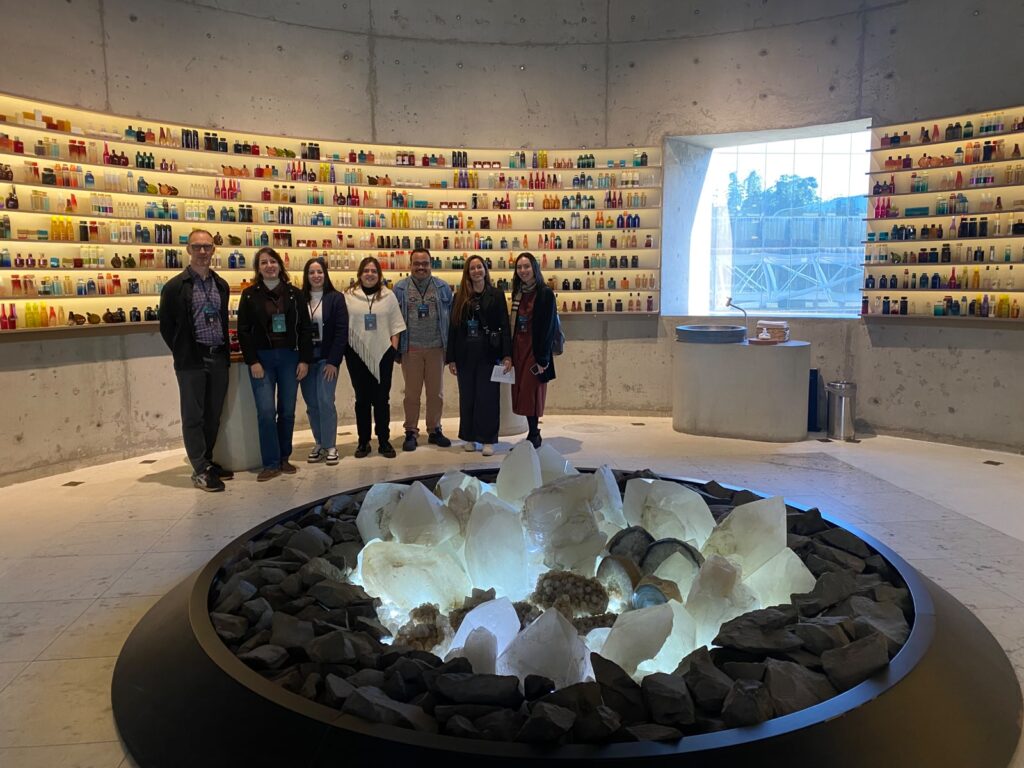
The result was a carefully curated programme that extended well beyond conventional academic paper sessions. Participants could visit Natura, the Brazilian cosmetics multinational known for its engagement with socio-biodiversity value chains; Dengo, a Brazilian chocolate company working with more sustainable cocoa production; and the Florestan Fernandes National School, associated with Brazil’s Landless Workers’ Movement, the MST. The organisers also prepared sustainable tourism suggestions intended to help international visitors engage with São Paulo and Brazil beyond familiar tourist circuits.
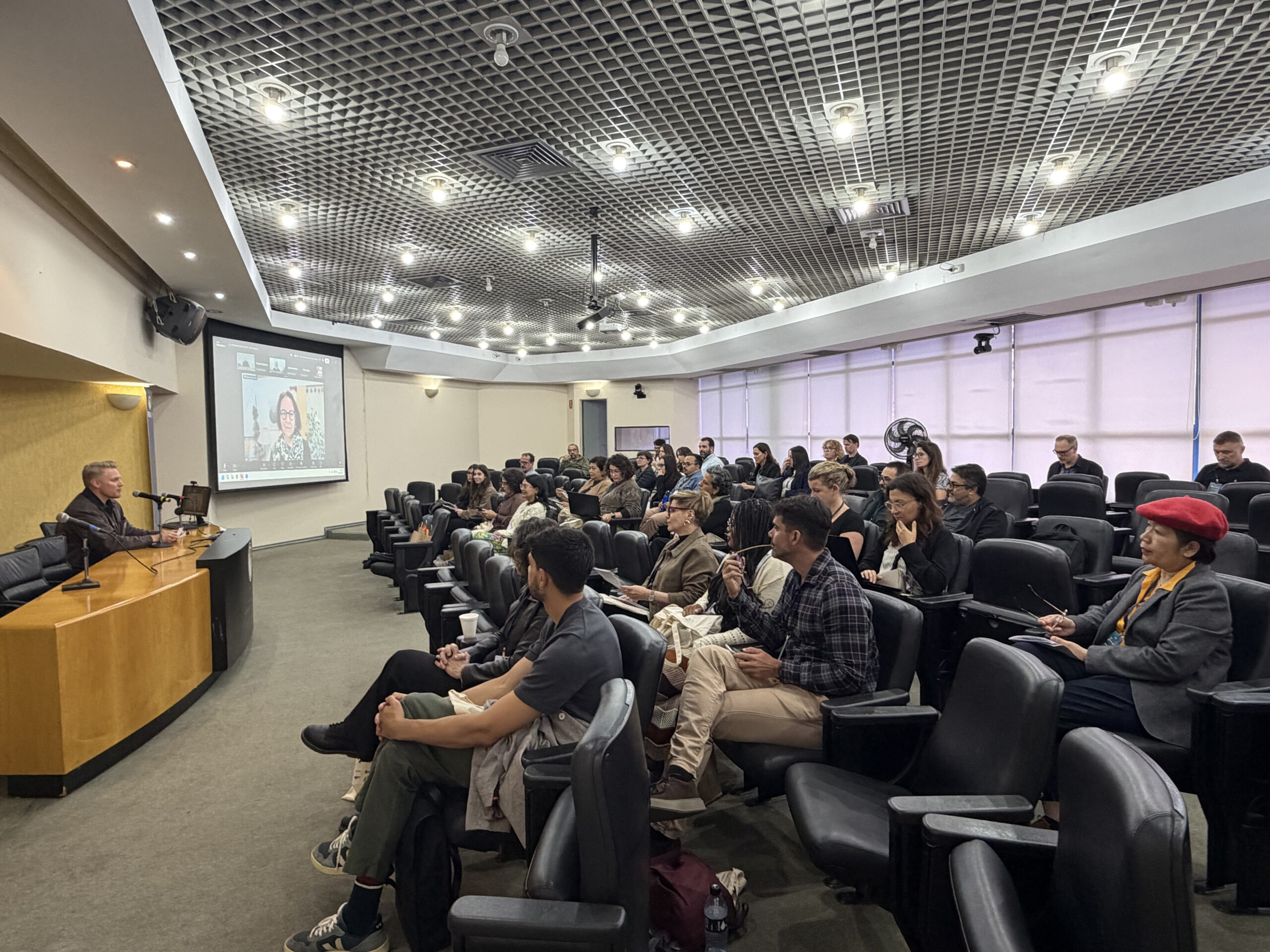
The Keynote sessions were carefully curated to contemplate visions from different sectors: activists, government, NGOs, traditional communities and companies. The purpose was to bring a rich discussion on how sustainable consumption affects and is affected by different actors in society.
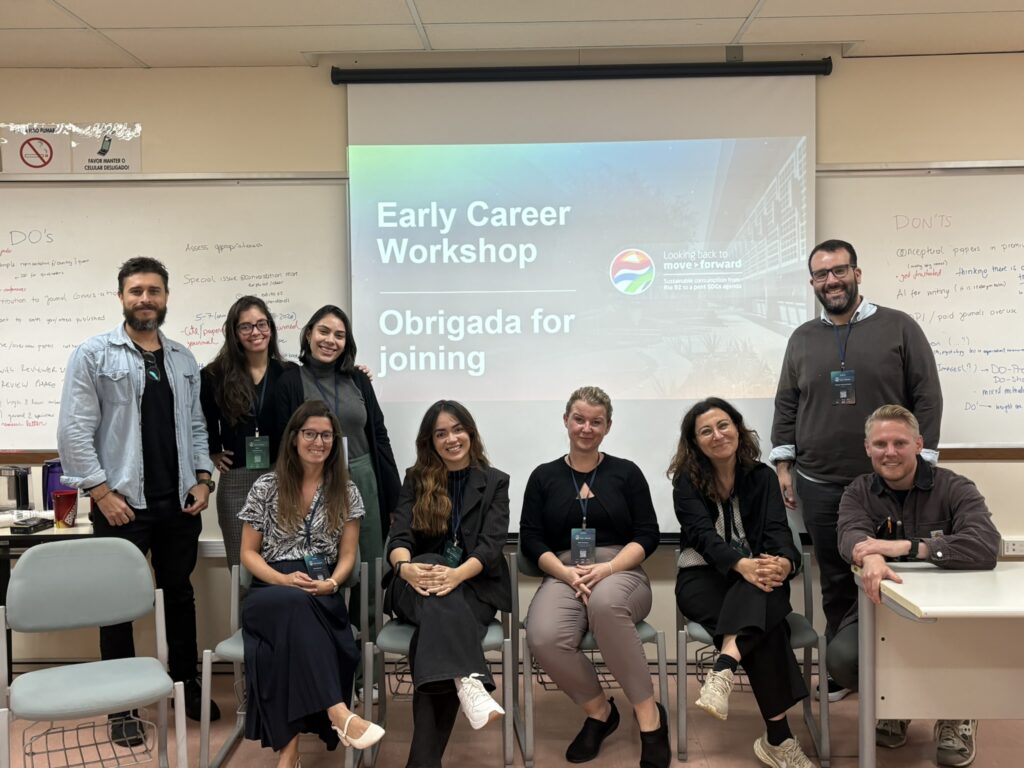
An Early Career Researcher workshop brought together emerging scholars from five countries. The conversations were thoughtful, open and unusually generous. Rather than treating early-career development as an addition to the “real” conference, the workshop created space to discuss the practical and intellectual challenges involved in building a research career around sustainable consumption.
The conference was also linked to three Special Issues in international journals, creating pathways through which discussions initiated in São Paulo can be developed into longer-term scholarly contributions.
The academic quality was consistently strong. Presentations explored work with Quilombola and Indigenous communities, circular-economy initiatives, food systems, manufacturing, lifestyles, sufficiency, spiritual consumption, sociobioeconomy, education and sustainable business models. These were not simply different empirical applications of familiar Global North frameworks. Many contributions challenged dominant assumptions about consumption, development and wellbeing, demonstrating why context matters for both theory and intervention.
The conference was relatively small. Yet, as E. F. Schumacher famously reminded the sustainability movement, small can be beautiful. A smaller gathering enabled conversations to continue across sessions, meals, visits and informal encounters. People encountered one another repeatedly, ideas travelled across thematic boundaries, and new collaborations began to emerge.
Scale should not be confused with significance.
The conference title as diagnosis?
Nevertheless, the conference title also provided an unexpectedly powerful lens through which to assess the event itself.
“Looking back to move forward” asks us to consider not only what sustainable-consumption research has accomplished, but also the assumptions, institutional arrangements and inequalities that have shaped it. Taking stock of the present may lead to conclusions that differ from those the international sustainability community has championed during recent decades.
The world in which the SDGs were adopted was already unequal, but it retained considerable faith in multilateral cooperation, global frameworks and the possibility of coordinating action around shared objectives. Today, that vision appears increasingly fragile. Geopolitical fragmentation, resurgent nationalism, war, ecological disruption and declining confidence in international institutions have changed the conditions under which collective action must take place.
The São Paulo conference reflected this wider tension in a more specific form.
For the first time, SCORAI Global met in Latin America. In principle, this created an opportunity to broaden the network, strengthen Latin American participation and reduce the expectation that scholars from the Global South must travel to Europe or North America to take part in an “international” academic community.
In practice, the conference became a gathering composed mainly of Latin American scholars, accompanied by a relatively small number of participants from Europe and North America. Those present came from across Brazil and from countries including Australia, Austria, Canada, Chile, France, Latvia, Lithuania, Poland, Portugal, the Netherlands, the United Kingdom, the United States and Switzerland. This diversity enriched the event, but the limited attendance from the network’s larger Global North constituencies was conspicuous.
This should not be interpreted as a shortcoming of the local organisers. On the contrary, the team created precisely the opening that a global network should seek to create. The outcome instead raises a more difficult question about SCORAI’s existing structure and identity.
Is SCORAI Global genuinely a global network, or does it remain, in practice, a predominantly Global North initiative with active North American and European centres and smaller regional extensions elsewhere?
The carbon dilemma—and its unequal history
Several members of SCORAI Europe chose not to attend because of the carbon emissions associated with intercontinental travel. This concern is legitimate. A network dedicated to sustainable consumption cannot ignore the environmental consequences of its own conferencing practices. Flying thousands of kilometres for relatively short meetings sits uneasily with the transformations in lifestyles and institutions that many SCORAI members advocate.
Yet the issue cannot end there. For decades, scholars from Latin America, Africa and Asia have faced an implicit requirement to travel northwards if they wish to participate fully in international conferences, scholarly networks and publication communities. The financial, administrative and carbon burdens of international academic mobility have disproportionately fallen on those located outside the major centres of knowledge production.
When a conference finally moves from the Global North to the Global South, declining to travel on environmental grounds can unintentionally reproduce the very asymmetry that changing the location was intended to challenge. Global South scholars have long been asked to reconcile participation with emissions, cost, visa requirements and institutional constraints. It would be problematic if carbon restraint became most visible precisely when the direction of travel was reversed.
This is not an argument that everyone should fly to every conference. Nor is it an accusation directed at individual colleagues who made conscientious decisions about their travel. It is an argument that the environmental costs of international exchange cannot be separated from questions of access, reciprocity and historical inequality.
The contradiction is structural and therefore requires a structural response.
A network of regions—or a global community?
The São Paulo conference suggests that SCORAI may need to reconsider what “global” should mean in a more ecologically constrained and geopolitically fragmented world.
One possibility is to strengthen a polycentric model built around relatively autonomous regional hubs. In this model, SCORAI Brazil, SCORAI Europe, SCORAI North America and other current or future regional communities would lead their own activities, shaped by their particular intellectual traditions, political contexts and sustainability challenges. They would be united through a broad shared purpose rather than through frequent physical congregation in a single global space.
This would reinvigorate an old sustainability principle: think globally, act locally—or, perhaps more accurately, organise glocally.
Such a model has several advantages. It can reduce travel, widen local participation, strengthen relationships with regional practitioners and policymakers, and prevent sustainable-consumption research from being governed by a single set of geographical or epistemological priorities. Regional hubs could create spaces in which different understandings of consumption, prosperity, development and transformation are not merely added to a pre-existing international agenda but help constitute that agenda.
However, regionalisation carries its own risks. A collection of locally active but weakly connected chapters may reproduce intellectual silos and inequalities in resources, visibility and publishing power. A shared vision alone does not guarantee meaningful collaboration. The SDGs themselves demonstrate both the value and the limitations of organising diverse actors around high-level common objectives without always providing the institutional capacity required to realise them.
The question is therefore not simply whether SCORAI should be global or regional. It is how to build durable connections between strong regional communities without recreating a centre–periphery structure.
A conference in Brazil should not primarily be understood as an opportunity to bring an established international conversation to Latin America. It should be an opportunity for the wider network to listen, learn and allow perspectives emerging from Latin America to reshape what SCORAI understands sustainable consumption to be.
The São Paulo programme showed the value of doing so. The discussions around traditional communities, social movements, sociobiodiversity networks and alternative economic practices brought questions of justice, territory, coloniality and collective organisation directly into conversations about consumption. These perspectives are not geographically specific illustrations of a universal theory developed elsewhere. They offer resources for rethinking the theory.
Looking forward differently
SCORAI Global 2026 was a successful conference. It offered strong research, meaningful field engagement, support for emerging scholars and the intimacy that only a smaller gathering can provide. But its significance may extend beyond what happened in the formal sessions.
By holding the conference in Latin America, SCORAI created an opportunity to examine itself. The comparatively limited participation from its larger Global North constituencies revealed the distance that remains between being internationally connected and being genuinely global.
That observation should not diminish the conference. It may be one of its most important outcomes.
Looking back from São Paulo suggests that moving forward cannot mean reproducing the same network through new locations. It requires reconsidering who travels, who hosts, who bears the costs of participation, whose knowledge defines the agenda and what institutional architecture a global community now needs.
Perhaps the future of SCORAI is neither a large global organisation nor a loose collection of isolated chapters? It may instead lie in becoming a polycentric community: rooted in strong regional networks, committed to reciprocal exchange, and connected through a shared but continuously renegotiated vision of sustainable consumption and just futures.
Small can indeed be beautiful. The challenge now is to ensure that it can also be reciprocal, plural and truly global.